


Comply with Regulations Without Crossing the Line, Stay Away from Professional Extortion, and AINOPOL Helps Your Hotel Achieve Compliance
2025-12-01 10:32:30
571
Recently, in many places, some customers have filed complaints and reports against hotels on the grounds that the hotels failed to implement real-name authentication for internet access and failed to retain internet access logs, and have demanded thousands of yuan in compensation. Many hotels have been put in a passive position due to insufficient compliance preparations.
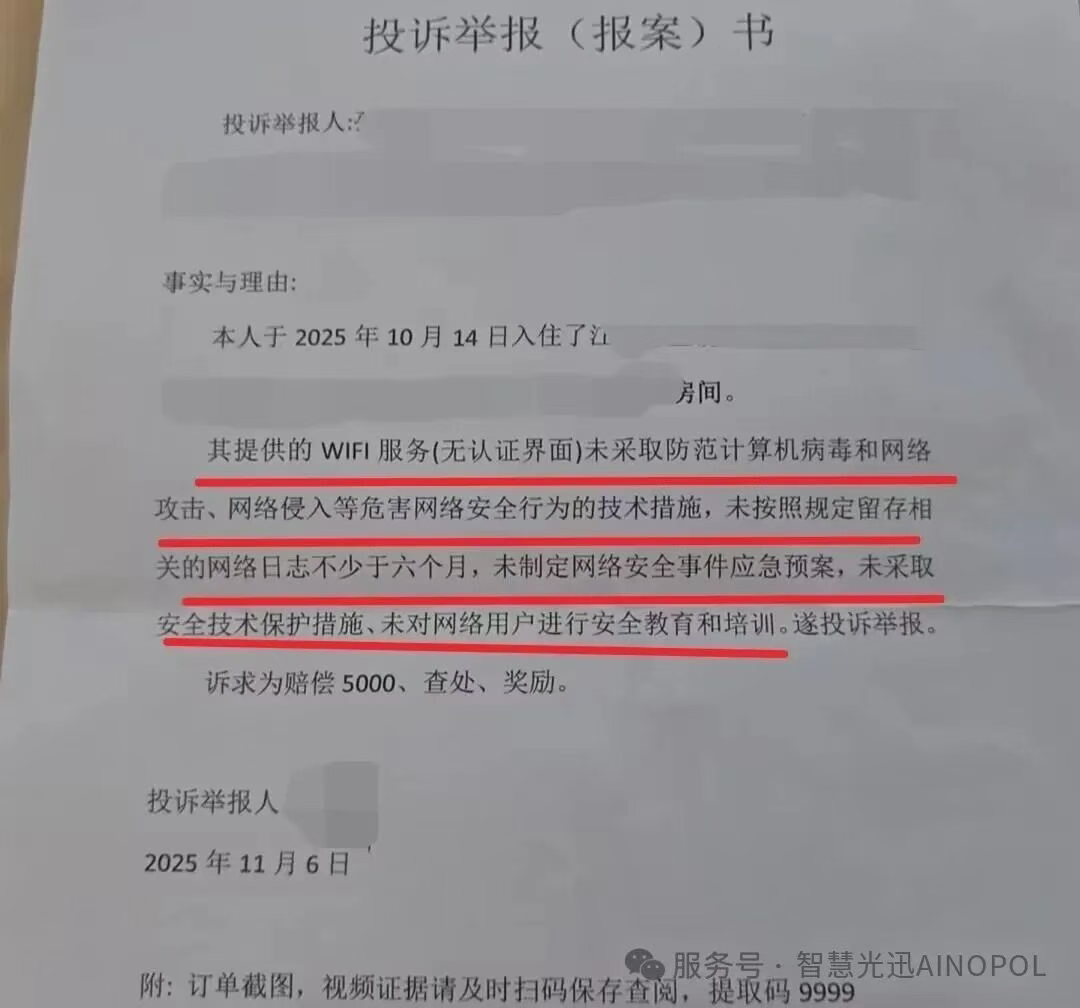
With the newly revised Cybersecurity Law of the People's Republic of China officially taking effect on January 1, 2026, and the implementation requirements of Order No. 151 of the Ministry of Public Security further strengthened, compliance has become a "mandatory task" for scenarios such as hotels.
What are the core requirements of Order No. 151?
Order No. 151 of the Ministry of Public Security focuses on cybersecurity and identity management, with clear core requirements as follows:
Indispensable Real-Name Authentication
When users access a hotel's network, they must complete real-name registration via methods such as SMS verification. This ensures that the individual using the network matches the real-name information, eliminates the risk of anonymous internet access, and serves as a crucial prerequisite for tracing online activities.
Log Retention
Internet access logs (including internet access time, device information, access records, etc.) must be retained for no less than 6 months. These logs should be searchable and traceable to meet the needs of regulatory inspections.
Prevention of Illegal Access
Technical measures must be adopted to block non-compliant terminals (such as hidden cameras) from accessing the network, thereby fortifying the cybersecurity defense line.
Compared with Order No. 82 issued in 2005 (which required logs to be pushed to public security platforms), Order No. 151 places greater emphasis on enterprises' independent compliance management. While simplifying procedures, it also strengthens the primary responsibility of enterprises. Hotels that fail to implement the above requirements may not only face claims from professional "complaint extortionists" (individuals who maliciously file complaints for compensation) but also be subject to administrative penalties by public security organs. In severe cases, their normal business operations may be affected.
AINOPOL M1 Dream Gateway:
Easily Address Regulatory Compliance and Claim Risks
AINOPOL ZH-M1 Dream Gateway: Simplifying Compliance with Solid Technology to Meet the Core Demands of Order No. 151
In response to the core requirements of Order No. 151, the AINOPOL ZH-M1 Dream Gateway leverages robust technology to make compliance simpler and more hassle-free:
The AINOPOL ZH-M1 Gateway enables one-click SMS-based real-name authentication, records internet access logs and stores data in real time, and precisely meets the requirements of Order No. 151, eliminating the risk of anonymous internet access at the source.
It supports local encrypted storage of internet access and authentication logs—fully satisfying the needs of regulatory inspections. No additional servers need to be deployed, saving both costs and effort.
Equipped with a built-in terminal identification function, it can accurately block illegal access. The gateway is plug-and-play, and when paired with a cloud-based management platform, it enables efficient batch operations. There is no need for a professional technical team to easily complete operation and maintenance, significantly reducing compliance costs.
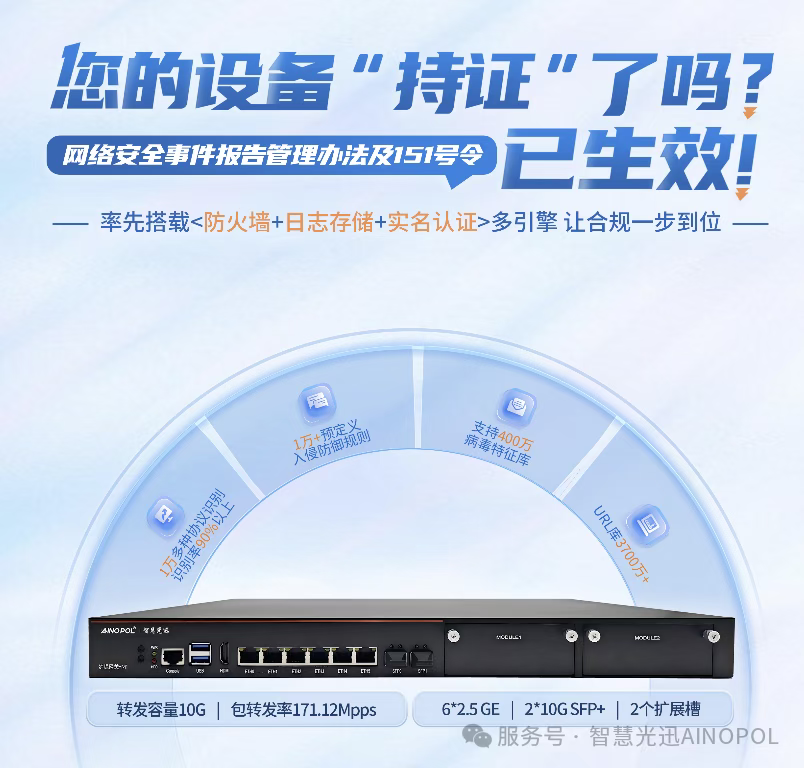
In addition to the ZH-M1 Gateway, AINOPOL also provides a full range of compliance solutions and other gateway models adapted to hotels of different scales, ensuring flexible adaptation to various scenarios.
The implementation of the newly revised Cybersecurity Law is entering the countdown, and compliance has become a "survival issue" for hotels. Rather than passively responding to extortion and penalties, it is better to proactively lay out compliance construction.
If your hotel is troubled by compliance issues, please feel free to contact distributors in various regions to obtain customized compliance solutions. Let professional technology build a solid compliance defense line for your hotel operation and prepare you to embrace the implementation of the new policy with peace of mind.