





Building on "Light": AINOPOL Empowers The First High School of Changsha to Construct an Intelligent Defense System with "Instant Visibility, Unobstructed Fiber, and One-Click Management"
2026-01-26 10:19:40
213
Building on "Light": AINOPOL Empowers The First High School of Changsha to Construct an Intelligent Defense System with "Instant Visibility, Unobstructed Fiber, and One-Click Management"
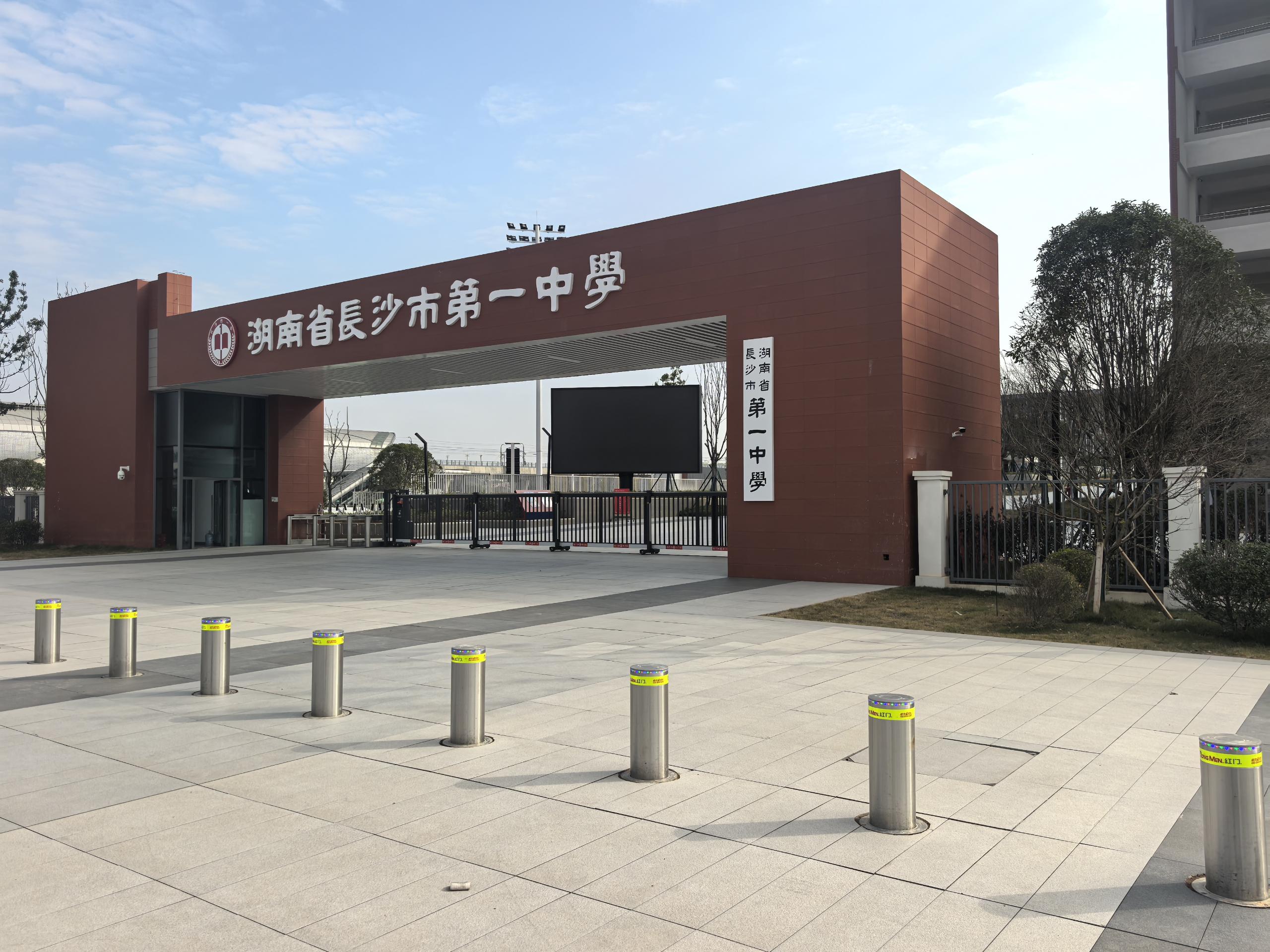
As a public senior high school co-constructed as a key project by Hunan Provincial, Changsha Municipal, and Xiangjiang New Area governments, the Xiangjiang Science City Campus of Hunan Changsha No.1 High School is located in the core area of Xiangjiang Science City. With a total investment of approximately 1 billion yuan, covering an area of 120,000 square meters (180 mu), the campus is designed with 96 teaching classes and can accommodate 4,200 students, serving as a crucial link in integrating the regional innovation ecosystem of "education + scientific research".
In the autumn of 2025, the highly anticipated Xiangjiang Science City Campus of Changsha No.1 High School was officially put into use. However, shortly after the opening of the school, the technical staff of the school discovered a tricky problem: during breaks between classes or group activities, obvious lags and frame drops occurred in the security monitoring images.
The Dilemma of Surveillance in High-Concurrency Scenarios
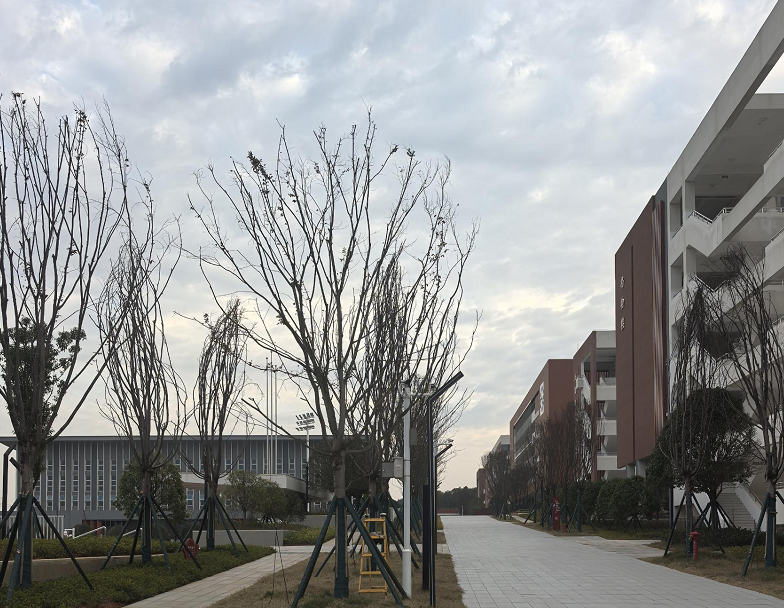
The Campus Security Center discovered that when large numbers of students gathered simultaneously in areas like the playground or main roads—such as during morning assemblies, recess exercises, or large-scale events—the monitoring system began to struggle. Particularly for cameras deployed on peripheral poles, issues such as delayed, choppy, or even interrupted feeds occurred frequently.
"This is not just a matter of choppy video; it directly impacts overall campus safety," emphasized the school principal when describing the situation. Across a vast campus spanning 180 mu, security monitoring serves as the school's "eyes." Any visual blind spots or information delays could pose significant management risks.
Technical analysis indicated that the root cause lay in the performance bottlenecks of the existing network equipment under high-concurrency scenarios. When multiple high-definition cameras simultaneously captured dense crowds and uploaded video streams, the traditional ONU devices could not effectively coordinate the sudden data surge, leading to network congestion and video anomalies.
For a school adjacent to the Academician Harbor, technology innovation communities, and new campuses of multiple universities, the stability and reliability of infrastructure are not only essential for its own operations but also a fundamental requirement for integrating into the regional "Education + Research" innovation ecosystem.
Limitations of Traditional Networks and New Requirements
AINOPOL discovered that while the school's original PON networking solution performed stably under routine scenarios, it exposed three main limitations when facing the uniquely high-density and high-concurrency scenarios of The First High School of Changsha:
Insufficient Bandwidth Allocation Mechanism: The upstream bandwidth of the traditional PON network is shared among multiple ONUs. When 27 monitoring points needed to transmit high-definition video streams simultaneously, bandwidth competition resulted in a failure to guarantee the timely transmission of critical data.
Limited Device Processing Capability: The design of the original ONU devices did not fully account for the pressure of concurrent processing of multiple high-definition video streams. CPU and cache resources became saturated rapidly under high loads, creating a bottleneck in the data processing chain.
Lack of Network Architecture Flexibility: Fixed network resource configurations struggled to adapt to traffic fluctuations caused by campus activities, lacking the ability to dynamically adjust based on real-time demands.
Meanwhile, the school imposed higher requirements on the security system: monitoring must not only "see" but also "see clearly and stably." Furthermore, operation and maintenance management needed to be simplified and intuitive to reduce the pressure on the technical team.
Precision Upgrade, All-Optical Renewal
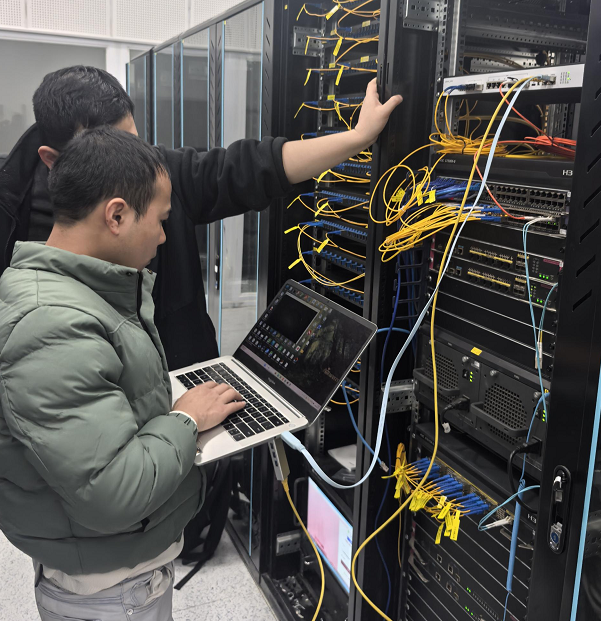
In response to the specific challenges faced by the Xiangjiang Science City Campus of The First High School of Changsha, AINOPOL proposed a precise and efficient solution: retaining the backbone optical cables while replacing the ONU devices at all 27 pole locations, upgrading them to the ZH-4GS(Ultra) + F4P all-optical network terminal combination independently developed by AINOPOL.
Zoned and Phased Construction: The 27 monitoring points were divided into four zones. Replacements were carried out in batches during weekends and after-school hours to ensure uninterrupted campus security.
Pre-configuration of Equipment: The ZH-4GS(Ultra) devices were uniformly configured prior to installation, enabling plug-and-play deployment on-site and significantly reducing the construction time for individual points.
Real-time Verification: Immediately after the replacement of each point, a linkage test with the monitoring center was conducted to ensure the video transmission quality met the standards.
The All-Optical Value Behind Smooth Surveillance
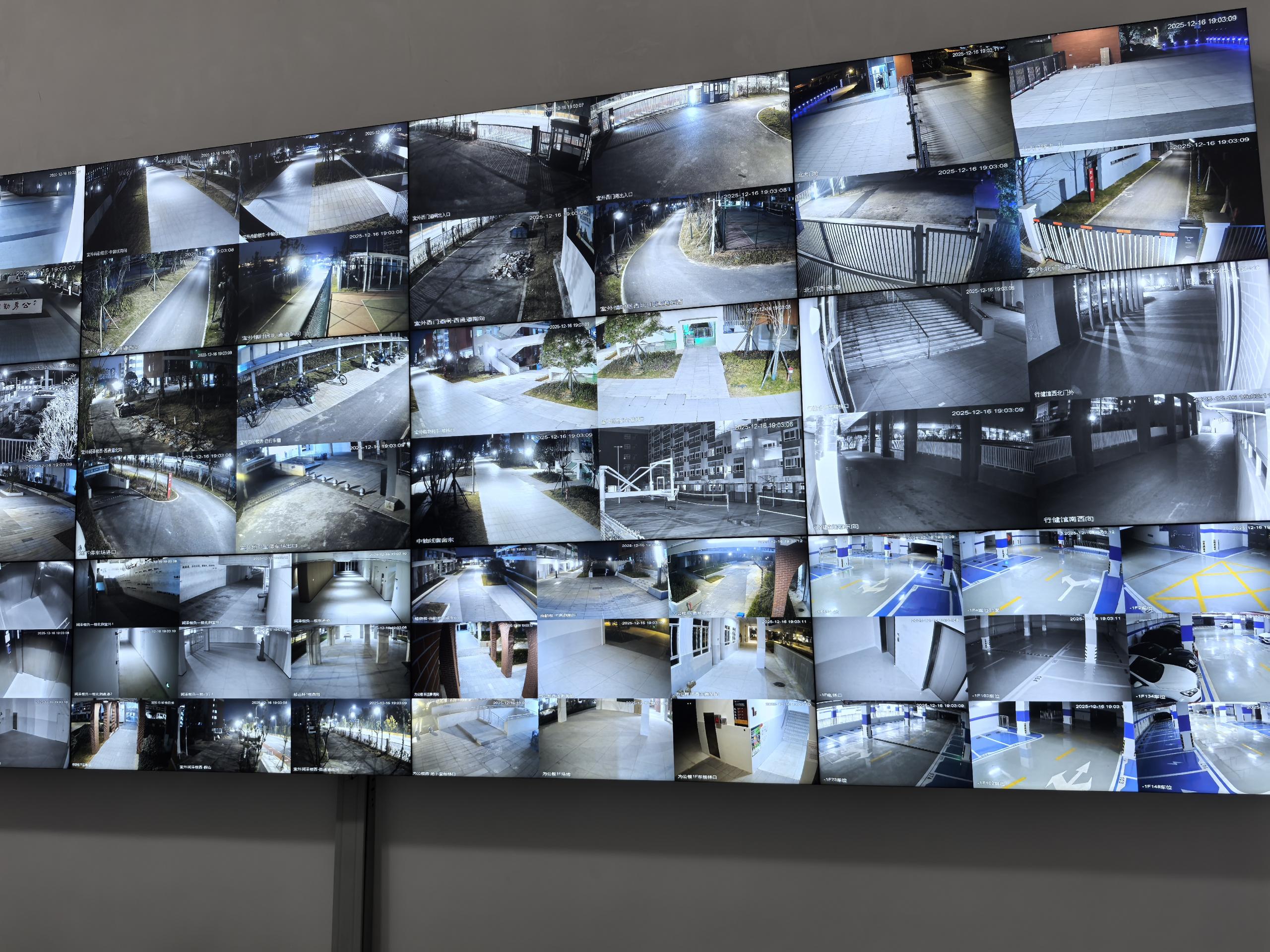
Following the completion of the equipment replacement, the monitoring large screens in the Campus Security Center displayed a completely renewed picture quality. AINOPOL's solution brought significant improvements to the Xiangjiang Science City Campus of The First High School of Changsha across three dimensions:
Smooth and Latency-Free Video: Even during peak traffic hours such as breaks between classes and school dismissal, the feeds from all 27 monitoring points maintain high-definition, smooth transmission, completely eliminating lag and frame drops. The Security Center can now grasp the dynamics of every corner of the campus in real-time and with crystal clarity.
Intelligent Bandwidth Scheduling: The ZH-4GS(Ultra) device features 4 PON ports. By connecting ONUs separately, sufficient upstream bandwidth is ensured. Furthermore, the ZH-4GS(Ultra) possesses intelligent bandwidth allocation capabilities, dynamically identifying video stream priorities to ensure that security monitoring data always receives stable transmission guarantees while simultaneously accommodating the normal requirements of other network applications.
Simplified and Efficient O&M: The new equipment supports unified remote management and configuration. Technical personnel can monitor and adjust the network status of all monitoring points in real-time through a visual interface, greatly reducing the complexity of daily operations and maintenance.
From choppy monitoring to smooth video, this network upgrade at the Xiangjiang Science City Campus of The First High School of Changsha may seem like a simple equipment replacement, but it has actually injected new momentum into the digital transformation of the entire campus.
On this fertile ground for innovation in Xiangjiang Science City, the new campus of this prestigious school is supporting more possibilities for modern education with a stable and efficient digital foundation. When security monitoring operates without "worries," management can dedicate more energy to the core mission of teaching innovation and talent cultivation.
AINOPOL uses optical fiber as its brush to outline smooth and reliable digital veins on this educational blueprint. Together with the Xiangjiang Science City Campus of The First High School of Changsha, we stride towards a new future of smart education at "All-Optical Speed."
Related Articles


